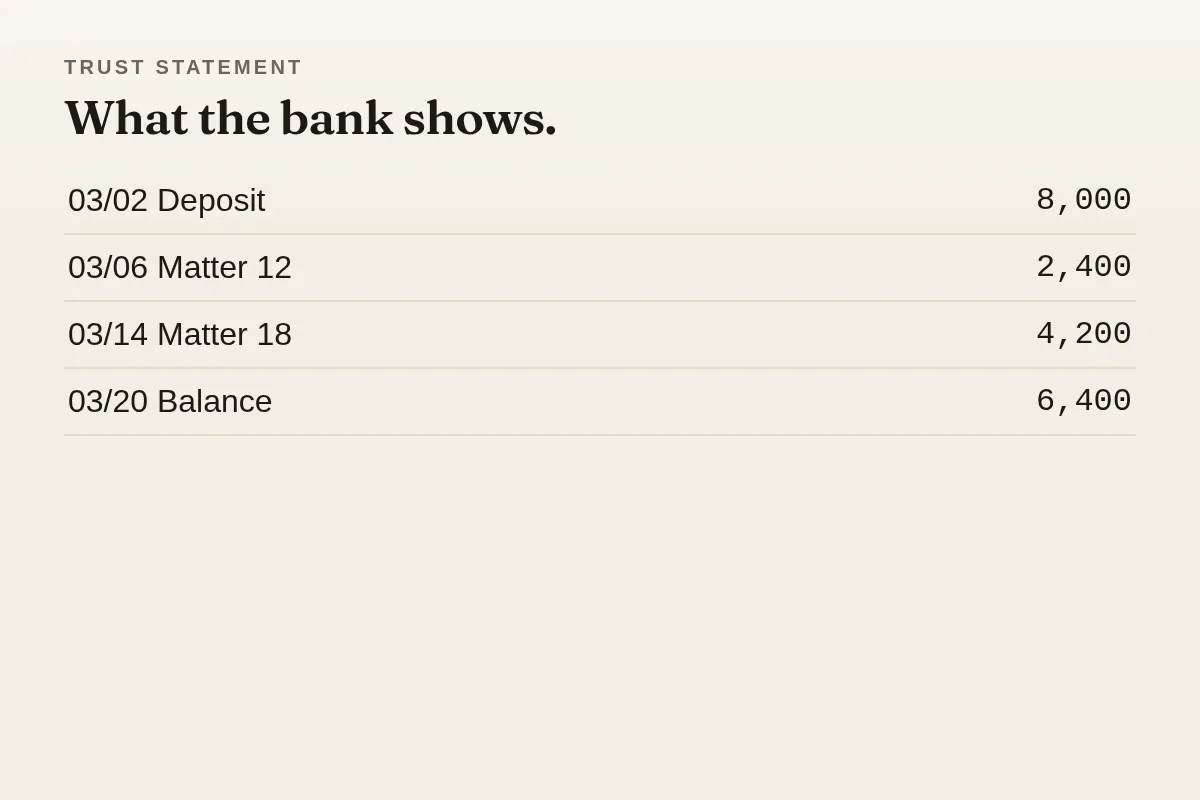
The call usually starts with the bank.
Someone has already tried to make the month look finished. The operating account is current. The trust side is not. We ask which bank in the file is supposed to hold client money, and whether that bank is a real account or a nickname sitting on operating money.
If the name is missing, we stop there. A fee conversation before the bank has a name is how the same deposit gets told two ways.
Bring the statement for one month. Cover the amounts if you want. Leave the account name visible. The name is the fact that changes the hour.
Then we count the lines, not the matters in someone's head.
A partner can tell you there are forty matters. The chart might show one parent. Those are not the same fact. We mark every open matter that has no line, and we do it from the chart you send, not from a memory of last year.
A line that exists and is unused is a different problem from a line that was never created. Tell us whether it sits empty or was never built. Those two repairs are not the same.
A line with no document yet stays on the balance sheet where we can see it. We do not park it in fee income to make the month look calm.
Interest is a destination, not a leftover.
When interest from pooled client funds hits fee income, the month can balance and still be wrong. The program your state names is the destination. We want the lines, with the account they hit left visible and the amount covered if you are not ready to show it.
A month that is short should look short. Interest from pooled client funds is not the number we borrow to hide the gap, and parking it on a fee line is how the next close starts wrong.
Schedule B on a personal return is a different interest story. The trust activity is the one we open first. If both exist, say so, and we will not mix them.
Bring one settlement, not the whole year.
Pick the most recent settlement deposit and name the account it used. If you cannot name it without opening three screens, that is already the answer. The fee account is the wrong landing place for money that still belongs to a client or to a third person whose claim has matured.
Leave the client name off the note. The account name is the fact that changes the hour.
If the fee was truly earned on the day of the deposit, say so in one line. If the settlement account is unclear, write unclear and leave the deposit where it sits.
The retainer item is the last stop, not the first.
Only after the bank, the lines, the interest, and one settlement are named do we look at the item an advanced fee uses. If that item points at income on the deposit date, we ask whether the fee was earned that day. If it was not, the item should point at the liability until the work is done.
Four stops, in that order, are enough for a first hour. The fee talk waits until those counts are filled in.
The return stays in the same hour. A deposit that moves after a year is filed can argue with that year. We name the year before anyone moves the deposit.
Ask about the trust bank.
One line is enough. Save the rest for the call.
You will be talking to the Steven Palmieri practice.