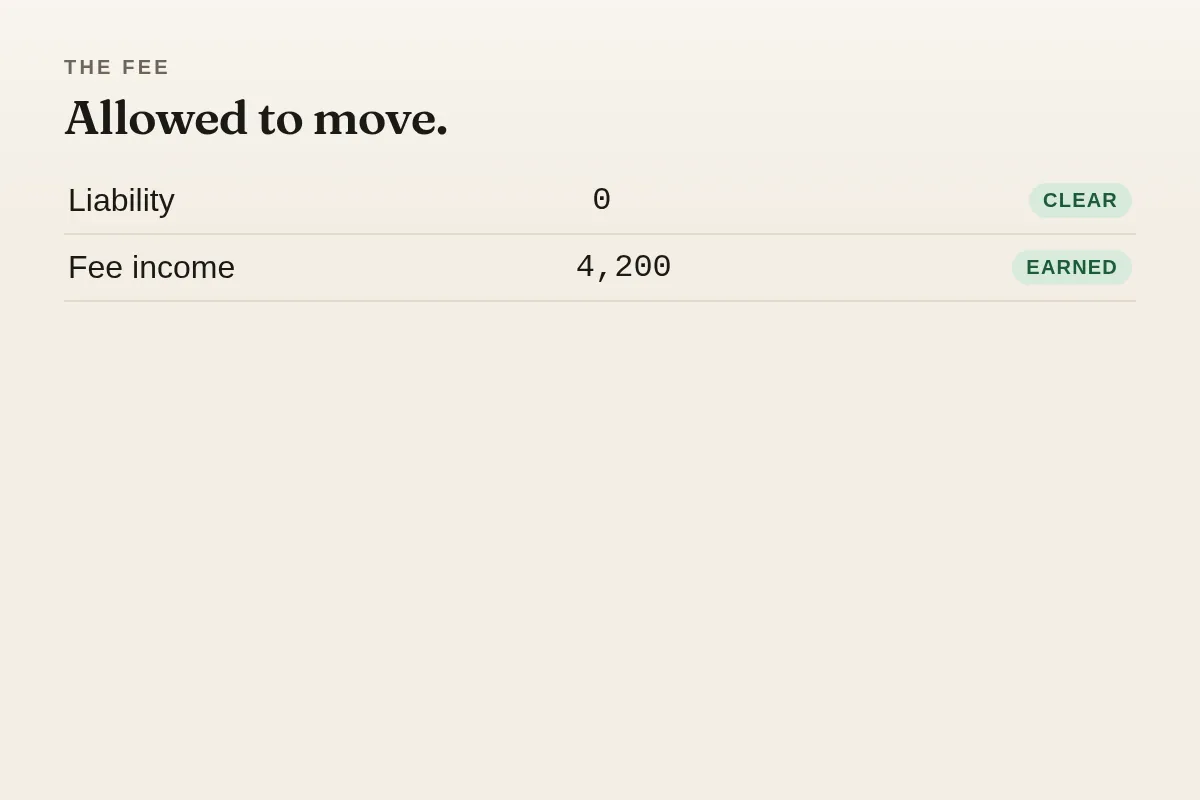
The picture, without a name or an amount.
Pick the newest settlement deposit. Name the account it used. If that account is fee income, we already know the shape of the hour. The client name can stay off the note.
A zero on the liability does not mean the client was paid. It often means the file recorded income while the bank still held the money, or the reverse, income with the money already gone and no row to explain it.
We would rather see the disagreement than a journal entry that forces a match. The forced match is what makes next quarter harder.
Earned, advanced, and the day in between.
A fee is income in the month the work earns it. Money that still has to be returned if the work stops is not that month yet. The item in the file should say which one you mean.
When nobody can point at the work that earned the deposit, the deposit waits on the liability until someone can.
Partners sometimes take a draw from a fee that has not been earned. We name that draw before it becomes a habit. The return has to tell the same story as the trust account about that day.
One deposit is the whole example.
Do not send the year. Send one deposit, the account, and the month. If you know the year that was already filed, add that year. If you do not, say so.
A third person with a matured claim is still in the picture until that person is paid. We do not treat the remainder as a fee while that claim is open.
Schedule K-1 on this page is a reminder that partners report their own share later. The trust deposit is not a partner share on the day it hits the bank.
What gets easier after the account is named.
The next month can record the fee in the month it is earned, and the liability can drop for a reason you can explain. That is the relief. It is ordinary, and it is not a performance.
Write the month the work was actually done beside the month the deposit arrived. If those months differ, the fee waits in the later one. A partner who already spent the money still needs the file to say when it was earned. The return copies that month, not the morning the wire hit.
We do not announce the month finished before the three reports agree. The fee conversation is the second half of the hour, not the opener.
Firms that work under a state trust rule can read that rule on the state page. This page stays with the habit that is the same in every state.
Name the deposit.
The account name is enough.
You will be talking to the Steven Palmieri practice.