What has to be keepable.
A bank statement, a liability detail, a list of deposits and payments, and the note that says why a fee moved. Those are the records. A software company changing its screen does not replace them.
Form SS-4 on this page is the application for an employer number. It is a reminder that some papers outlast a single year. It is not the trust file itself.
If the file is thinner than the matter was long, say so. Thin is a fact we can work with. A reconstructed month that nobody can support is not.
How long, without a number we do not own.
Keep the records of client funds for as long as the revenue service and the firm's own state ask. Those two clocks are not always the same length. We read the clock that applies to the firm in front of us. We do not print a single number on this page and pretend it fits every state.
A firm that has already destroyed a year should say which year. We will not invent the missing statement. The gap stays visible until a copy turns up or the firm accepts that the month cannot be rebuilt.
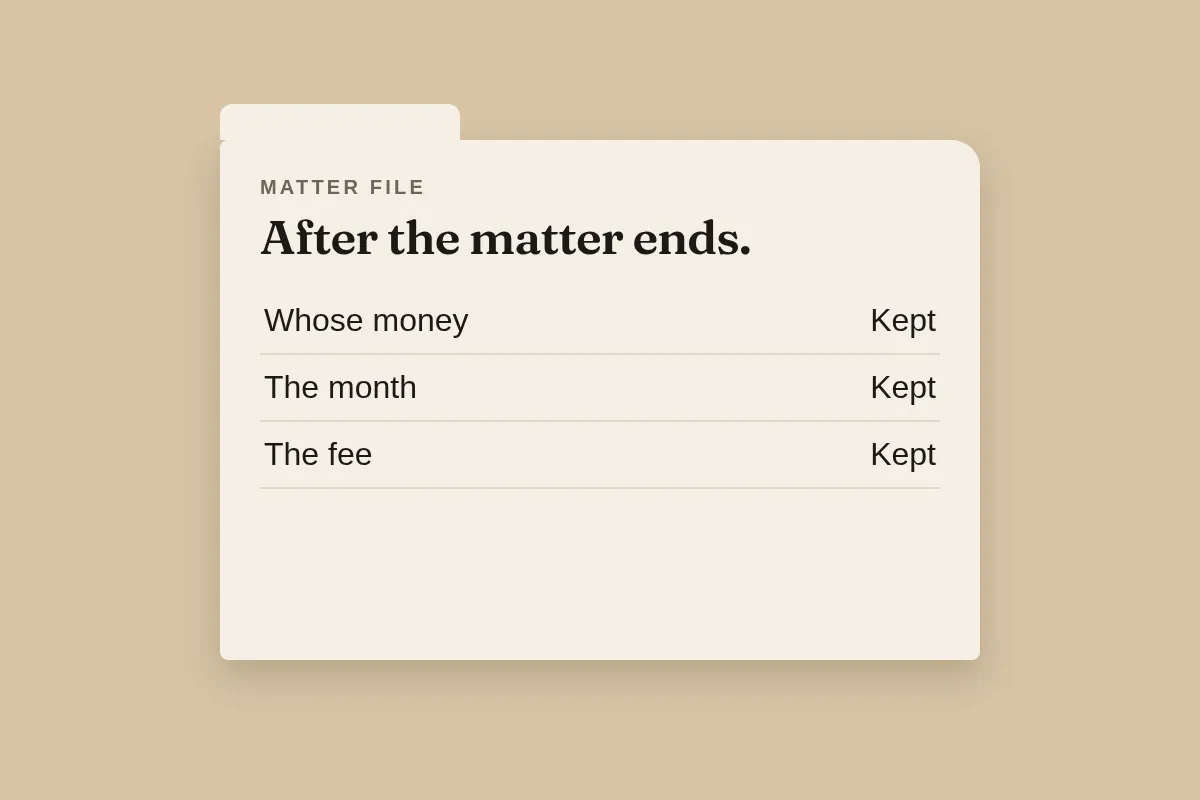
A closed matter is not a reason to drop the row on the day the last bill went out. The row stays until the retention clock, not the mood of the file room, says it can go.
Closing is more than a zero balance.
Your state names who must be told when a pooled trust account closes. Unearned fees and third-party amounts are paid out before the balance hits zero. A journal entry does not send that notice.
If the account is already closed, tell us whether the notice went and what the file still shows as owed. A missing notice matters more than a clean chart of accounts.
We are not the firm's counsel if a grievance is already in the air. We will say so. The records question can still be answered in the same hour.
What a later examiner will ask to see.
An examiner who asks about a retainer will ask for the item, the deposit, and the year. An examiner who asks about payroll will ask for the forms the provider filed. The trust records are the third pile, and they have to be findable without a partner's memory.
Put the three piles where a second person can open them. A file that lives only in one inbox is a file that disappears when that person is out.
We do not need the client's name on the first note. We need to know whether the papers exist, and for which years.
A plain inventory.
List the years you can still print. List the years you cannot. Say whether the trust account is open. That inventory is enough to start.
The monthly tie still happens on the years you can print. A missing year does not excuse a sloppy current month.
Firms that work under a state trust rule can read that rule on the state page. This page stays with the habit that is the same in every state.
Name the file.
The years are enough for a first note.
You will be talking to the Steven Palmieri practice.