
Law Firm QuickBooks Cleanup The trust bank before the fee.
The trust account and the liability do not agree, and a fee may have moved before it should. Steven Palmieri is a Tax CFO, the Entrepreneur's CFO, and we reconcile the trust bank to every matter before any fee moves.
Where the trust bank stands.
Amounts can wait. The practice is in Dallas.
You will be talking to the Steven Palmieri practice.
The Tax CFO way with a trust account.
A bookkeeper makes the trust bank match the ledger. A Tax CFO keeps that match every month, decides when a fee is earned and what the partners take after it, and keeps the return honest about both. The three reports are the floor. The decision about fees and draws is the work. Steven Palmieri makes that call with you. On a trust account, owners use the name Entrepreneur's CFO for this monthly decision about fees and draws.
Three reports, one month.
The bank statement, the balance sheet, and the matter list have to land on the same number.
Click to see the three reports ›Tap to see the three reports ›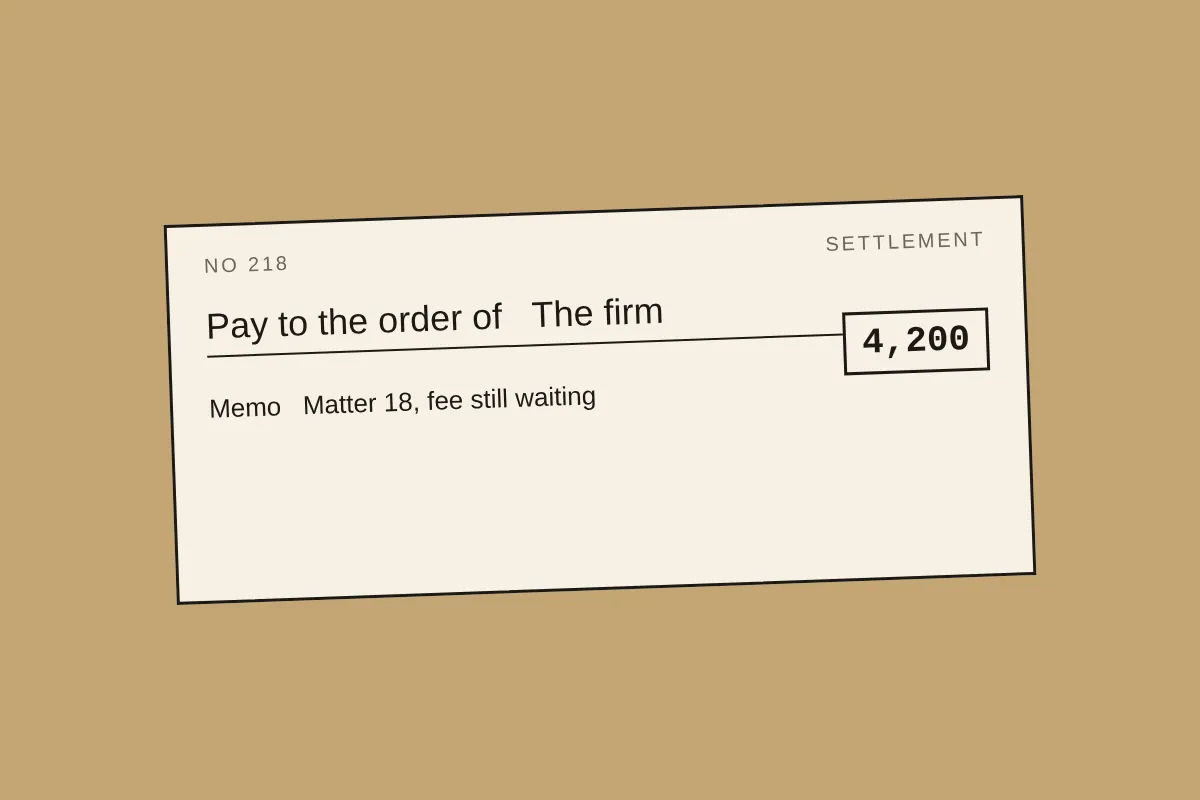
A settlement in fee income.
A settlement in fee income, with the liability at zero, is the next picture we read.
Click to see the deposit ›Tap to see the deposit ›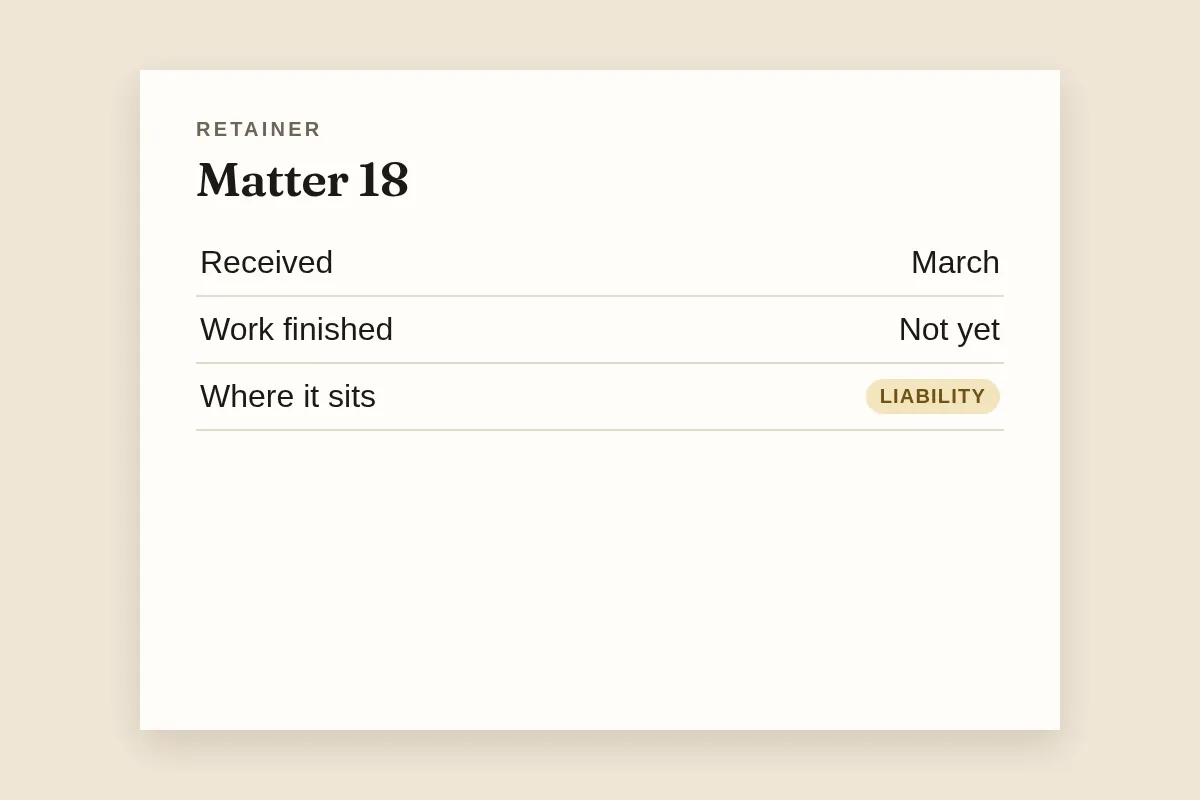
A retainer that moved too soon.
The month the fee was earned is the month it belongs in income.
Click to see the retainer ›Tap to see the retainer ›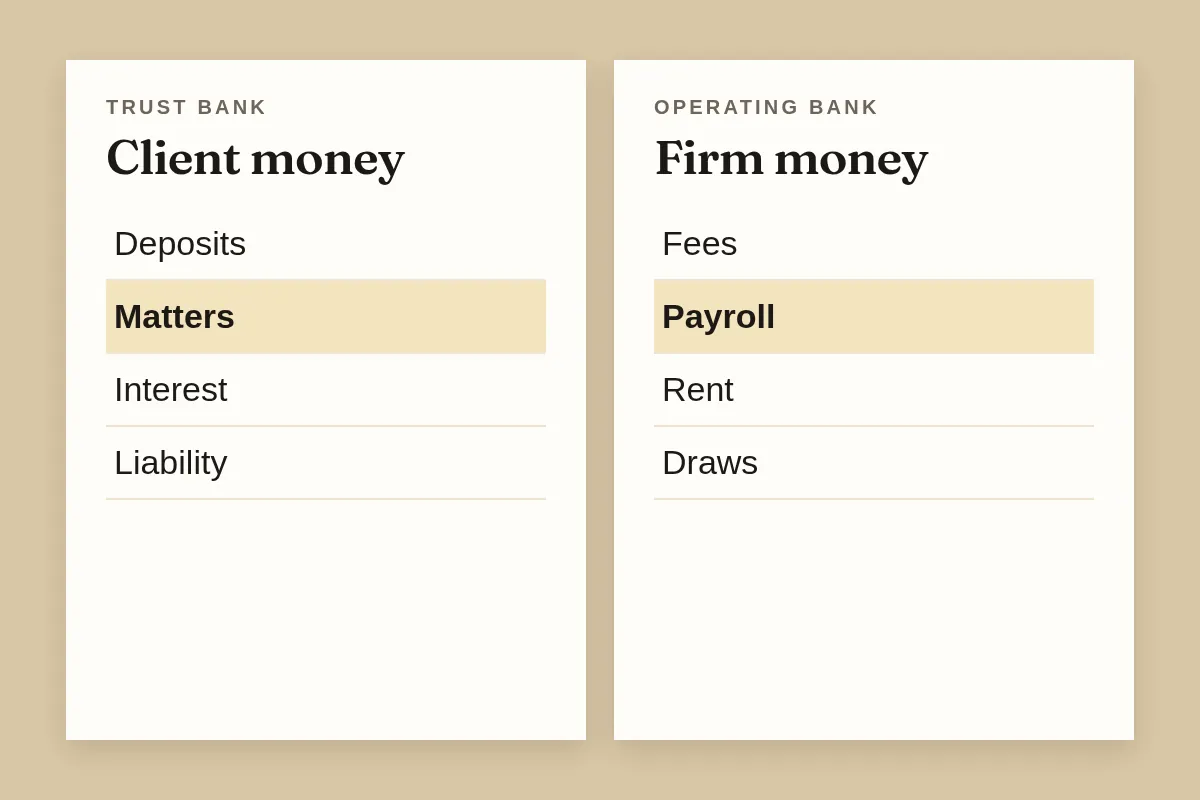
The operating bank.
Client money and firm money stop sharing a nickname.
Click to see the operating bank ›Tap to see the operating bank ›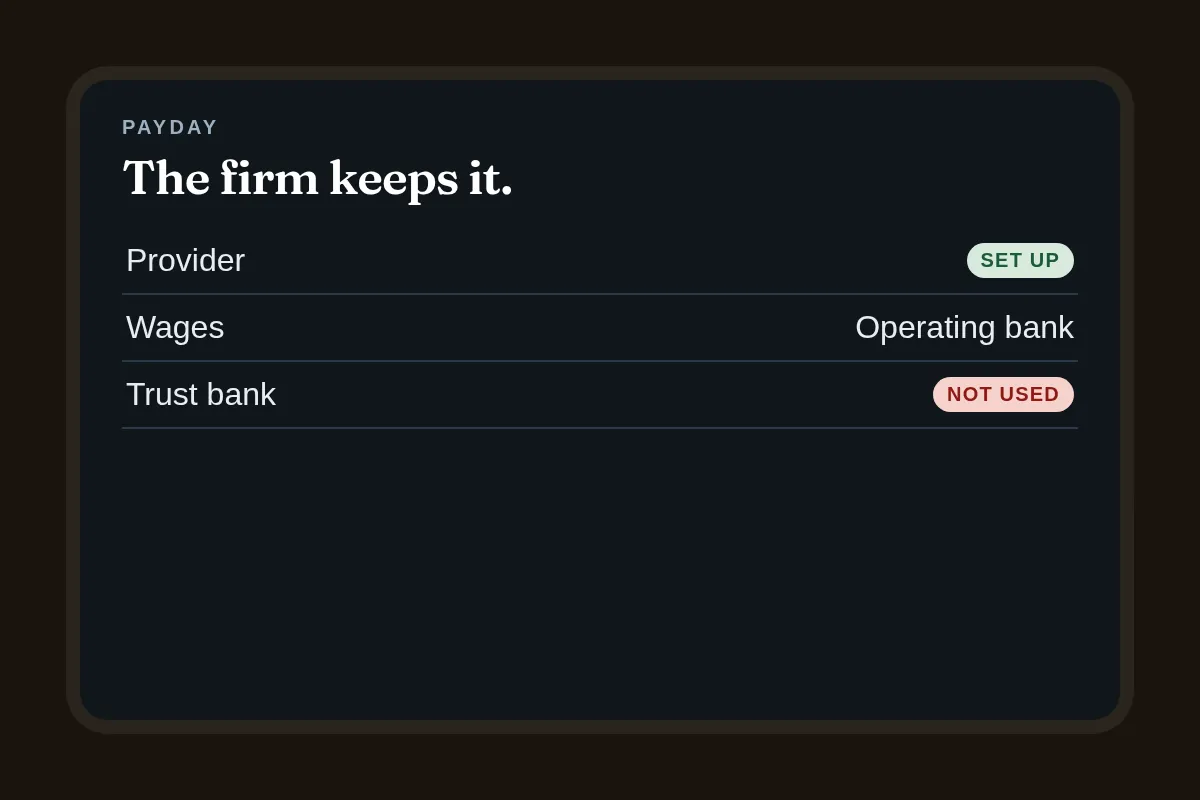
Payday setup for a small firm.
We set the provider up. The firm keeps payday.
Click to see payroll setup ›Tap to see payroll setup ›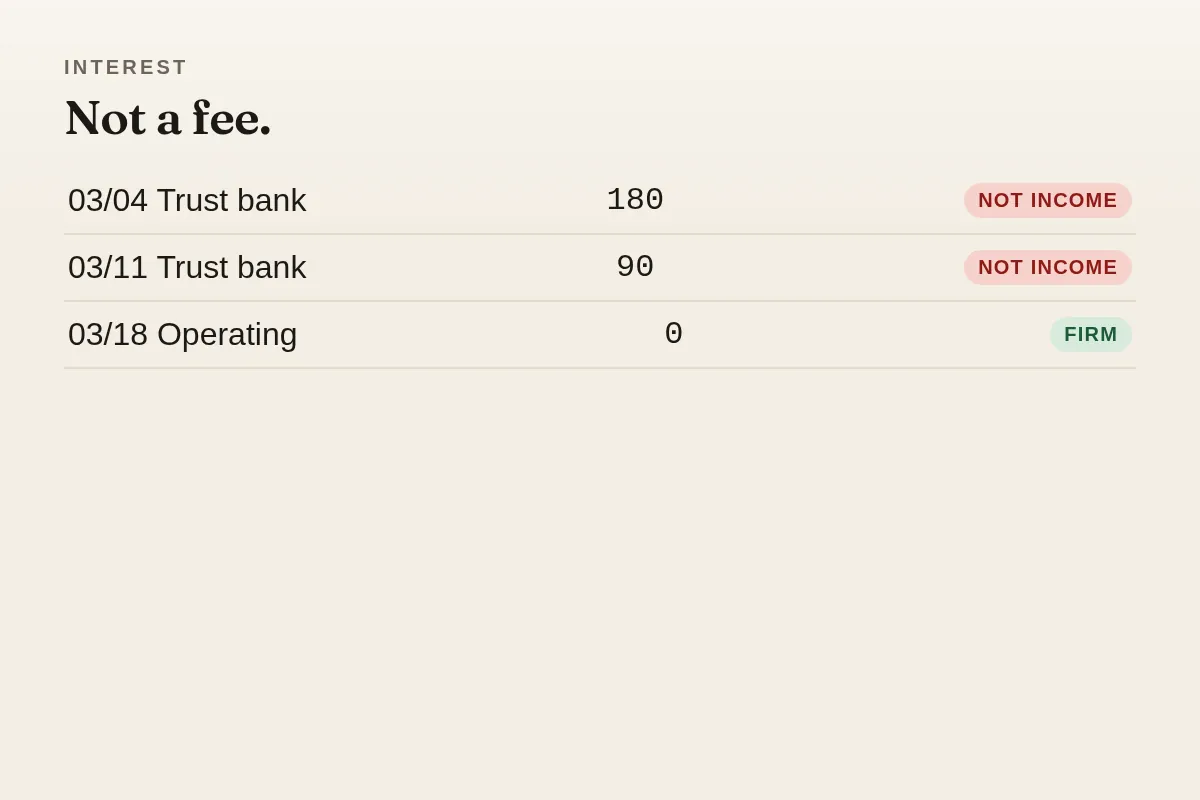
Interest that is not a fee.
Interest on client funds comes off income and goes where your state sends it.
Click to see the bank ›Tap to see the bank ›Six troubles in a trust file.
Open one. It says what we do with that trouble before a fee moves.
1Interest on fees.
We move it off income.
Interest on pooled client funds belongs to the program your state names, not on a fee line.
2Settlement in income.
We name the account it used.
A settlement stays off the fee account until the matter shows the fee was earned.
3Parent with no lines.
We add a line per matter.
A parent called client trust is unfinished while any open matter has no line of its own.
4Row under zero.
We flag that matter.
A row under zero means the matter spent more than it held.
5Fee pointed wrong.
We point it at the liability.
An advanced fee waits on the liability until the work is earned.
6Two reports only.
We print both.
The balance sheet and the liability detail sit beside one bank statement.
Steven Palmieri, Tax CFO.
The lights are off and the trust printout is still on the table. That is the evening we are here for. A parent account with no matter lines is a cabinet with no folders, and we build the folders first.
Steven and his team.
Click to meet Steven ›Tap to meet Steven ›Send both totals.
We do not call the trust bank tied until both totals sit on one line.
The practice is in Dallas. Firms in other places meet us on a video call.
You will be talking to the Steven Palmieri practice.
Read where the bank sits.
The trust money needs its own bank.
The worry usually starts when the bank balance and the list of matters refuse to match. People then ask us to clean the file. The first thing we want is not a fee. It is the bank the client money actually sits in.
Client money that a lawyer expects to hold only a short time belongs in a trust account, apart from the operating bank. The file should not use the operating bank as a nickname for that money. Two banks are easier to explain than one clever name.
We ask for that trust bank to be its own account in the file before a fee is discussed. Intuit owns the QuickBooks name. This site is not part of Intuit.
Read the matter lines.
A parent liability is not finished.
A setup that stops at one account called client trust has not finished the chart. A reconciliation wants a record for every client, so each open matter needs its own line under that parent.
Send the chart. Any matter with no line gets marked before we talk about the month. A line that still has no document stays visible on the balance sheet until the paper says where it belongs. Fee income is the wrong drawer for that line.
Missing lines are the work. The parent can stay. A partner can tell you there are forty matters. The chart might show one parent. Those are not the same fact.
Read the firm cushion.
Bank fees need the firm's own money.
A wire fee has to come from the firm's money. If it comes out of a client balance, the matter is already wrong before anyone looks at income. The file needs a firm-funds line so that fee has a home that is not a client's.
Client funds stay in the trust account, apart from operating money. A program that receives interest is a different line. It is not this cushion, and it should not be used as one when a bank fee posts.
We look for that firm line on the same pass as the matter lines. If it is missing, the wire fee has nowhere honest to go.
Read the interest.
Interest has a destination that is not the firm.
Interest on pooled client funds is paid to the program your state names for that purpose. It is not fee income, and it is not a plug that makes a short month balance. When it lands on the firm, the month can look tidy while someone else's money is in the wrong place.
Send the interest lines from the trust activity, with the amount covered and the account they hit left visible. We want to see the destination, not a story about it.
A short month stays short. Interest from client funds is not the patch that makes the total look calm, and hiding that line inside a fee is how the tie gets worse.
Read a settlement.
A settlement does not open on the fee account.
Funds a client or a third person is entitled to receive stay trust money until they are paid. A third person has a claim the firm has to honor when that claim has already matured. Until then the money is still in trust.
The practical test is plain. Pick one settlement deposit and name the account it used. If the name is a fee account, the picture is already wrong and the income account can stay covered while we look.
We do not need the client's name on the first pass. We need the account. Leave the name off the note.
Read the retainer item.
The item decides when a fee is earned.
Tell a true non-refundable retainer from an advanced fee, and tie the account every month. In the file the choice shows up as the item. An item pointed at income recognizes the fee on the day of the deposit. An item pointed at the liability waits until the fee is earned.
Send the retainer item. The income account can stay covered. If the item hits income on day one, say whether that fee was truly earned that day or whether it was money still owed back if the work stopped.
This is the conversation that keeps a filed year from arguing with the trust account about the same deposit.
Read the two reports.
Two reports sit beside the statement.
Some firms are taught a three-way package. We start with two reports the file can already print, then the bank statement makes the third witness. One report is the balance sheet, with the trust bank and the trust liability on the same view. The other is the liability detail, one row per matter.
Those two sit beside the bank statement for a single month. We do not teach click-paths we have not opened in your file. If a report will not print, that is news, and it comes before any story about the month being finished.
When the two totals match and every matter row is at least zero, the file is ready for a fee conversation. Not before.
Read a row under zero.
A row under zero is the matter spending ahead.
A row below zero on that detail means the matter took more than it held. We show the row and we leave the lecture out. The monthly tie exists because a trust account that drifts is how a firm meets trouble it did not plan.
A grievance is a question for the firm's own counsel. We are not that counsel, and we will say so rather than wander into it. Send the detail with the name covered if you want the row read without the name.
The feeling we are here for is the evening the row is no longer under zero and the partner can leave the printout on the table.
Read a closing.
Closing the account is more than a zero balance.
Your state names who must be told when a pooled trust account closes, and how soon. Unearned fees and third-party amounts are paid out before the balance hits zero. A software post does not send that notice.
Records of the funds still have to be kept for as long as your state and the revenue service ask. Tell us whether the account is still open, and what the file still shows as owed. We will not invent a missing month.
If the account is already closed and the notice was never sent, that fact matters more than a clean chart.
Read a filed year.
A filed return can disagree with the trust story.
Publication 5602 tells examiners that a cash-basis attorney's retainer is generally taxable when received, while an advance can still sit in trust until it is earned. The cover of that attorney guide says the text is not an official position and cannot be cited as one. The revision date on the file is 11 January 2022.
Name the years already filed before any retainer moves. The trust story and the return story can disagree about the same deposit, and moving the deposit without naming the year is how that disagreement gets worse.
Source. IRS Publication 5602. The publication.
Read the scope.
Four counts, and no price on this page.
Months since the trust totals last agreed. How many matters are open. How many settlements hit income. How many interest lines hit the firm. Those four counts are the scope. No hour rate is printed here, and no price is set on this page.
Send the file and those boxes get filled before a price is discussed. If a count is unknown, say unknown. A guess dressed up as a count wastes the first hour.
The return stays in the same conversation. Payroll, when a firm needs it, is set up with a provider the firm runs. We do not run payday.
Read the operating month.
Clean the operating books to their own bank.
A trust file can be the emergency and the operating account can still be a month behind. We clean the operating books to the bank on the same engagement when you want both. Deposits, checks, and the card that paid a filing fee all need a home that is not the trust bank.
A line with no paper behind it stays where we can see it. We do not rename it into fee income so the month looks finished. Unknown is a better first answer than a guess.
The first clean month is a specific relief. Owners describe it as the first evening they did not carry the trust account home. We want that evening, and we do not announce it before the pages agree.