What finished means on this page.
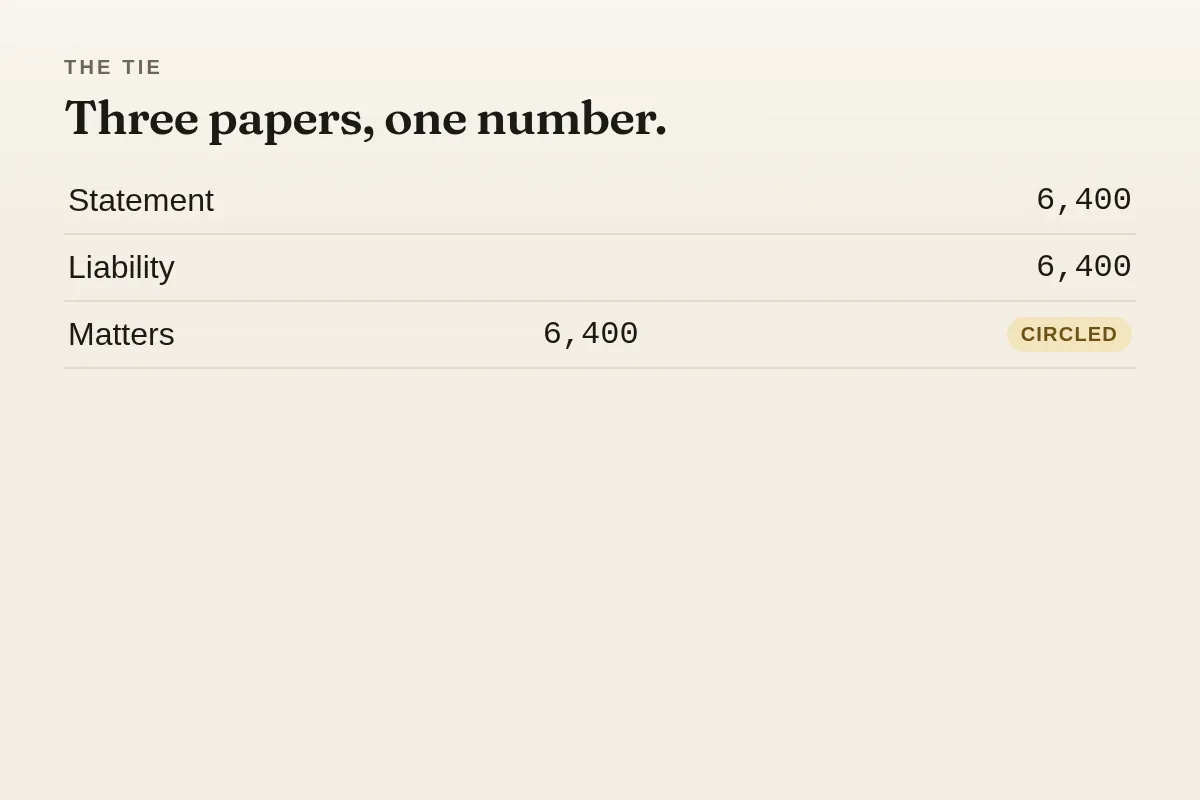
A month is finished when three papers say the same thing. The first is the bank statement for the account that holds client money, every page of one month. The second is the balance sheet for that same month, with that bank and the trust liability on one view. The third is the liability detail, one row for each matter that was open.
If any paper will not print, that fact comes before a story about a clean close. We do not teach a click path we have not opened in your file. Schedule SE on this page is a return form. It is not one of the three papers.
Some trainings give this habit a long name. The name is less useful than the three papers on the table. When they match, and every matter row is at least zero, the file is ready for a fee conversation.
Ordinary ways the month fails.
The bank shows a deposit the liability does not. The liability shows a matter the bank has already paid out. A spreadsheet on the side matches neither. Any one of those is enough to stop the fee.
A cleared check that never had a matter line is the same kind of miss. We leave the line visible until a document says where it belongs. Outstanding items belong on a list with dates.
An item older than the firm's own habit gets a name, even when the name is unknown. Unknown is allowed. A silent plug is not. Cover client names and amounts on the first pass if you want. Leave account names visible.
The weekday we keep.
Pick a weekday and keep it. The tie is a monthly habit, not a rescue we invent in the week a partner gets nervous. If the last tie was six months ago, say six months. If the totals have never agreed, say that.
A partner and the person who can open the file are enough in the room. If those are the same person, say so. The rest of the firm can stay at their own work.
The return stays in the same conversation. A deposit that moves after a year is filed can argue with that year. Name the year before anyone moves the deposit.
After the three agree.
Then we talk about the fee, the draw, and what the partners take. Not before. The three papers are the floor. The decision about draws is the work a Tax CFO is in the room to make with you.
Steven Palmieri makes that call with the firm. We keep the read on the weekday you pick, by video, with the books shared. The practice is not a software tour.
Intuit owns the QuickBooks name. This site is unaffiliated with Intuit. The papers are the account, not a tour of the menus.
What to send for one month.
One statement. One balance sheet. One matter detail. The retainer item, if a deposit hit income the day it arrived. The interest lines, if any of them hit the firm.
Four counts set the scope later. Months since the totals last agreed. Open matters. Settlements that hit income. Interest lines that hit the firm. This page only asks for the three papers.
If a count is unknown, write unknown. A guess dressed up as a count wastes the first hour. No price is printed here.
Firms that work under a state trust rule can read that rule on the state page. This page stays with the habit that is the same in every state.
Name the month.
One month is enough to start.
You will be talking to the Steven Palmieri practice.